
Surprise Sub Lesson: Generic Legos & Google Docs
About three months ago I did something I often do but I am embarrassed to admit:
I assigned a "sub lesson" when absent, asked students to submit evidence of completion, and then...
...wait for it...
DIDN'T EVER LOOK at the document!
Yes, I suppose it's a combination of my confidence in the accountability created by having students submit images via a collaborative google doc, and the pure hecticness****during the school year. More of the later.
Anyhow, here I am, sitting at some random cafe enjoying my summer and cleaning up my Google Drive, and I stumbled upon a Google Doc that contained a sub assignment I had asked my students to do when learning about balancing ionic compounds.
I have been striving to incorporate more inquiry into my sub assignments, and this was my first stab at it.
A little bit about the lesson:
My 4-year-old twin boys were gifted a set of HUGE, generic legos, and I had a thought! See image below:
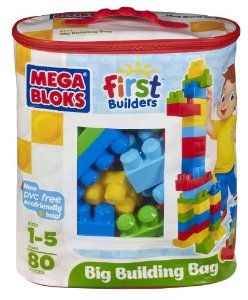
While my kids quickly realized that they were not "real" Legos and went on to doing whatever 4-year-old twin boys do, I saw a potential sub lesson!
In my chemistry class we had just got done learning about the Periodic Table of Elements and how positive and negative ions form. I had yet to introduce the idea of ions transferring electrons to form balanced ionic compounds. Hence, the entry point for inquiry!
I was to be gone the next day of class, and I decided to cut all the legos into blocks of 1, 2, or 3, bumps (not sure what the correct term is?), that, in my mind, represented the +1/-1, +2/-2, and +3/-3 ions. It is a common activity to have students form ionic compounds by fitting them together correctly.
But, my students did not know this. Hence, the entry point for inquiry!
After placing all the pieces in the center of the room, I emailed my sub the following prompt:
Ask students to model the formation of Ionic Compounds using this document. Ask them to insert images of their models into the document.
To be honest, I had know idea what they would produce, as the prompt was very open-ended in general, let alone for a sub assignment.
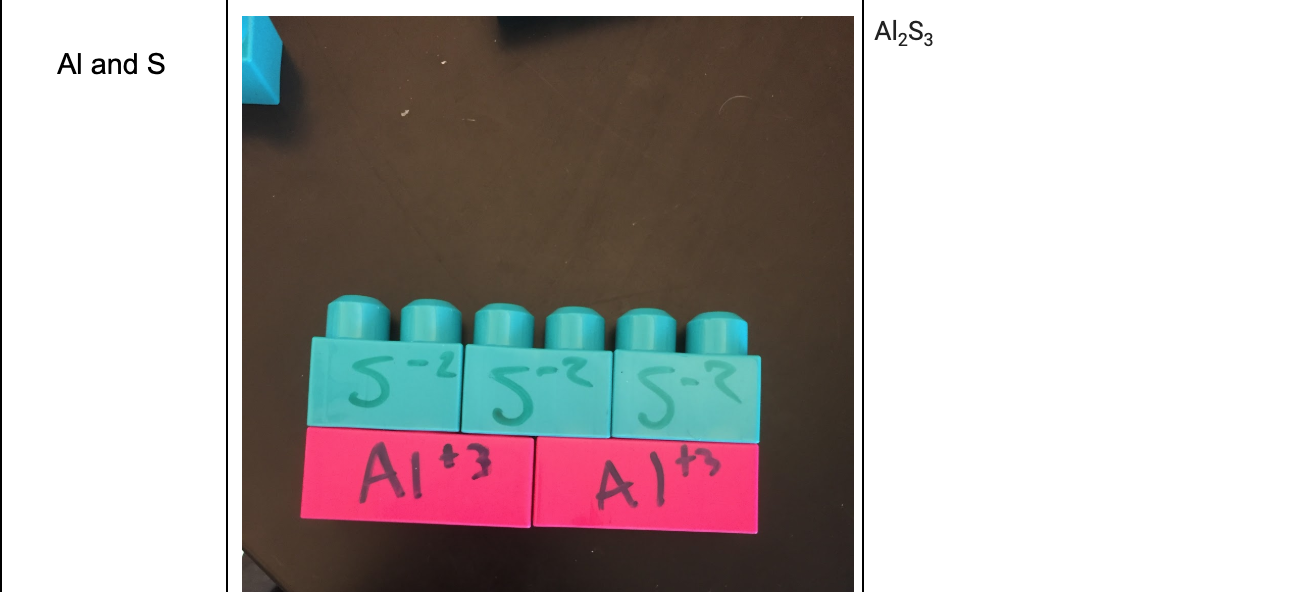
Back to the point of this post. When I looked at their responses...today...I was blown away. They completely nailed the activity. Shame on me for not even following up with them the next day in class...It is so easy to lose track of the most important things as a teacher at times.. Embarrassing, but true.
Below is screenshot from the shared google doc where they uploaded their responses:
Related reading
Simulating Parkinson's: Using Electronics to Build Empathy
This lab activity takes students on a unique journey through the world of neuroscience and engineering to explore the complex nature of Parkinson's Disease. Students will simulate the motor...
Read →Exploring Fentanyl's Risks: Using Chemistry to Imitate the Brain's Protective Layer
This lab activity directly tackles a pressing issue: the opioid crisis, with a spotlight on fentanyl, one of the most potent and problematic drugs out there. This isn't just any experiment; it's a...
Read →Fast AI Game Design Using ChatGPT and p5.js
Experimenting with leveraging ChatGPT as a medium for generating code to run simple JavaScript games in p5.js . My ultimate goal is to create a system where students can use both applications to...
Read →