
Inquiry Videos & Full-Screen YouTube Hack
Inspired by a fabulous Dan Meyer session I attended at my school last month, I have begun the process of trying to re-frame as many released AP Chemistry problems into inquiry videos as possible. Using Dan’s 101qs/#anyqs videos as a framework, my goal is to create a video that stimulates the students to ask the desired question the problem intends to ask. Rather than posing a scenario for students, providing all the necessary information to solve it, THEN asking the question, multimedia can be harnessed to create a gradually released framework where students are naturally perplexed enough to wonderthe question the problem intends to ask. Once this is achieved, further information is provided, eventually scaffolding the students through the problem-solving process. My plan is to use such videos to initiate theExplore-Flip-Apply inquiry process, use them as warm ups the day of an inquiry lab, or even as extension activities after a problem-solving session upon conclusion of a learning cycle. Below is my first attempt. To introduce this process to my students, I surprised them with a group quiz that I would have normally done with the traditional question format.
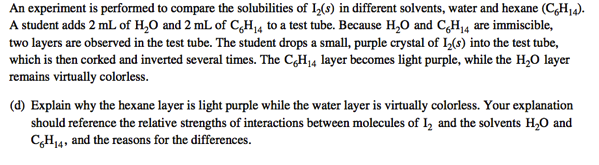
First I found this released free response question from the 2012 AP Chemistry Chemistry test that fit the standards to be assessed on the quiz:
Then using my iPhone, and with the help of a colleague, I recorded this video version of the question and published to YouTube:
Because I posted the video to YouTube, I didn’t want students distracted by all the other garbage. To negotiate this, I created a URL that would open the video in full screen immediately. Below is how I did that:
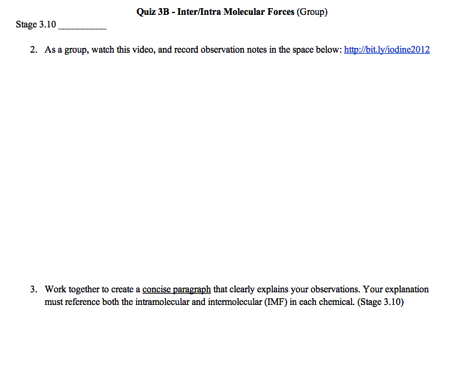
After using bit.ly to shorten the link (I chose bit.ly instead of goo.gl so I could customize the address for student ease of access during the quiz), I created and administered the below quiz:
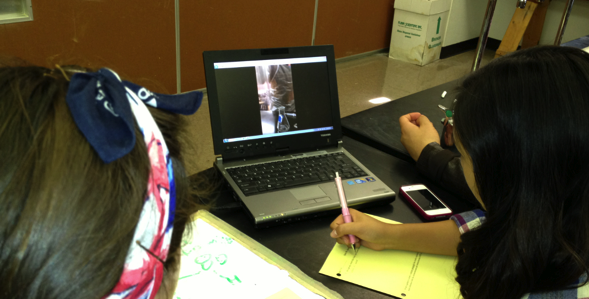
Below is a picture of the process:
Related reading
Simulating Parkinson's: Using Electronics to Build Empathy
This lab activity takes students on a unique journey through the world of neuroscience and engineering to explore the complex nature of Parkinson's Disease. Students will simulate the motor...
Read →Exploring Fentanyl's Risks: Using Chemistry to Imitate the Brain's Protective Layer
This lab activity directly tackles a pressing issue: the opioid crisis, with a spotlight on fentanyl, one of the most potent and problematic drugs out there. This isn't just any experiment; it's a...
Read →Fast AI Game Design Using ChatGPT and p5.js
Experimenting with leveraging ChatGPT as a medium for generating code to run simple JavaScript games in p5.js . My ultimate goal is to create a system where students can use both applications to...
Read →